Every company runs on knowledge. The problem is, most of it is scattered. It lives in meetings no one revisits, buried email threads, and documents spread across different tools. When someone leaves or a new hire joins, that knowledge either disappears or takes weeks to piece back together.
That's where a knowledge management framework comes in. At a basic level, it's a structured approach to how your organization captures, organizes, shares, and applies what it knows. Done right, it helps the next decision happen faster and with better context. The challenge isn't understanding the idea. It's that traditional approaches were built for static documentation and manual capture. Work doesn't happen that way anymore. Read AI sits across your meetings, emails, and messages as an AI assistant, turning scattered conversations into a connected system of intelligence that's searchable across every tool your team uses.
This guide breaks down what a knowledge management framework actually is, how it fits with a knowledge management system, and how to build something that works with your existing workflows instead of against them.
A knowledge management framework defines how an organization manages knowledge across the entire lifecycle. That includes knowledge creation, knowledge capture, storage, knowledge sharing, and application. It covers both explicit knowledge, like documentation and SOPs, and tacit knowledge, which is the context and experience people carry in their heads.
One of the most common mistakes is confusing the framework with the knowledge management system. They're not the same. The framework is the structure. It defines processes, governance, clearly defined roles, and what knowledge matters. The knowledge management system is the technology layer that supports those processes. Without a framework, even the best knowledge management tool becomes another silo. Modern frameworks treat knowledge less like a storage problem and more like a system of intelligence and action: connected across platforms, searchable in seconds, and useful at the moment of decision.
A strong knowledge framework changes how decisions get made, how new hires ramp, and how much institutional context survives turnover. It surfaces critical knowledge at the moment of decision, shortens onboarding from weeks to days, and reduces the risk that key context walks out the door when people leave. Knowledge workers using Read AI reclaim 20+ hours a month by having meeting context, action items, and organizational history searchable in one place. The compounding effect is what matters: when knowledge flows reliably across teams, every new project starts with more context than the last one, and the organization stops solving the same problems twice.
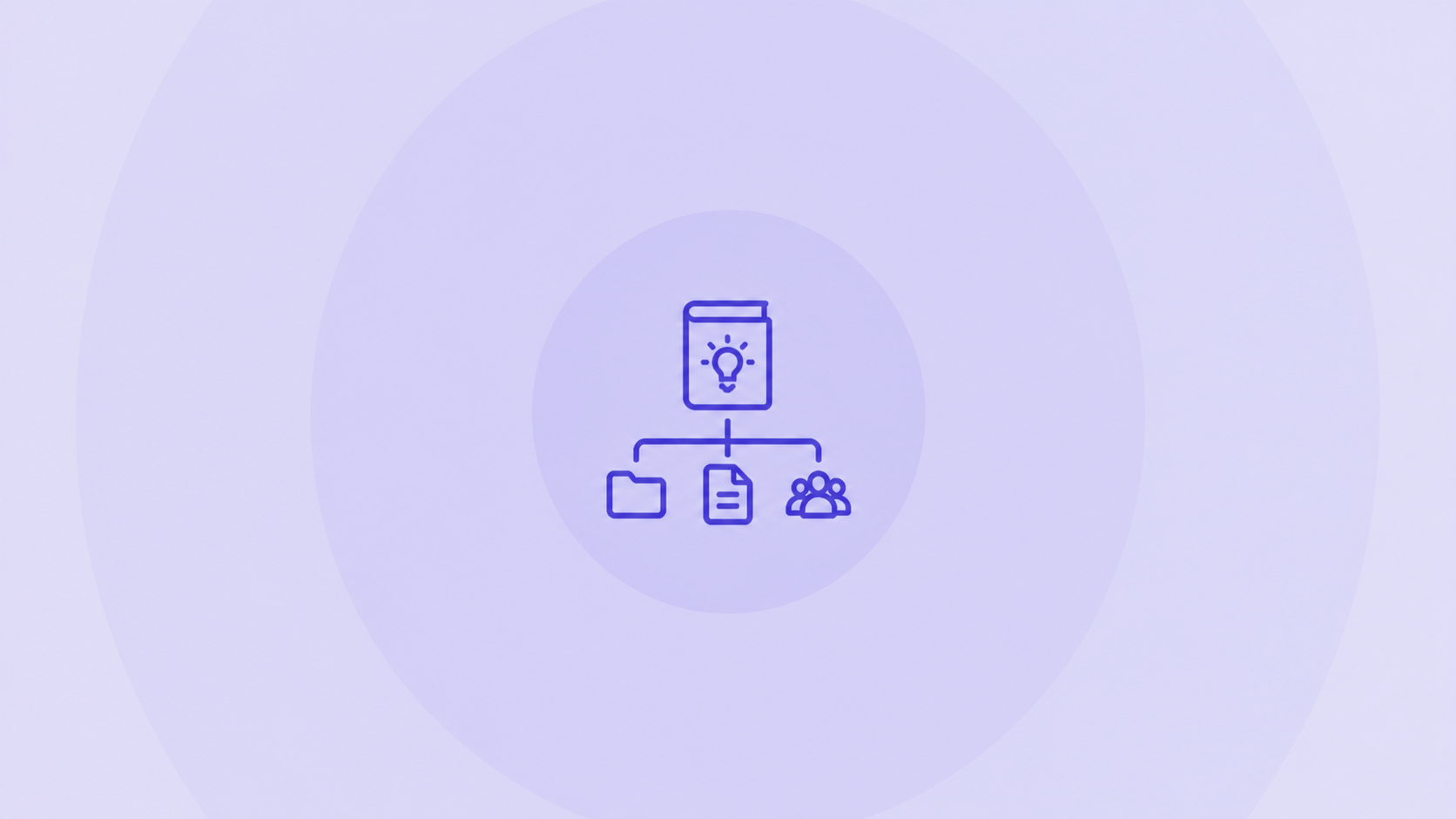
Most frameworks come back to the same four areas. Each one plays a different role.
Across all four, governance and strategy matter. A strong management framework connects knowledge management activities to business goals and measurable outcomes, with support from senior leaders. The modern shift is that the technology layer is no longer just a place to store knowledge. AI assistants like Read AI sit across the platforms where work actually happens, including Zoom, Google Meet, Microsoft Teams, email, and messaging, so the people, process, and content layers stop being bottlenecked by manual capture.
There are a few well-known models that most frameworks typically draw from.
The SECI model describes how knowledge converts between tacit and explicit forms through four modes: socialization (tacit to tacit), externalization (tacit to explicit), combination (explicit to explicit), and internalization (explicit to tacit). It's often used in environments focused on innovation and knowledge creation.
The APQC framework is widely used at the enterprise level. It covers four stages: strategy development, capability assessment, design and implementation, and measurement. It's built around measurable outcomes and alignment with strategic goals.
KCS (Knowledge-Centered Service) is designed for support teams. It emphasizes knowledge sharing behaviors by capturing knowledge as issues are solved and immediately feeding it back into the knowledge base. Most organizations don't follow one model exactly. They combine elements based on their needs.
This is where most KM initiatives struggle. The common mistake is starting with a tool instead of a plan. A better approach starts with understanding your organization's knowledge. Look for repeated questions, bottlenecks, and places where critical knowledge depends on specific individuals. That gives you a clear picture of where to focus first.
Next, define your business goals and how knowledge management supports them. This could include faster onboarding, improved customer satisfaction, or better decision-making. From there, map knowledge flows across teams. Assign defined roles, including a knowledge manager and content owners, and outline how knowledge will move through your system.
Then build processes for knowledge capture, review, and updates. Keep them simple. Overly complex processes are one of the fastest ways KM frameworks fail. Finally, select your knowledge management system and supporting tools. Make sure they integrate with your existing workflows and don't require people to change how they work too much.
Traditional frameworks assume people will document what they know. In reality, that rarely happens. Most of an organization's knowledge lives in conversations, meetings, and messages, which is exactly where tacit knowledge gets lost. When an employee leaves or rotates teams, the organization loses what they knew, including the reasoning and context behind decisions, not just the artifacts. That cost compounds across every silo: deals stall because context didn't transfer, new hires repeat questions that were answered six months ago, and project history lives only in the heads of the people who were in the room.
Read AI captures that knowledge automatically, without asking employees to document what they already know. Meetings become searchable summaries with decisions and action items. Emails and messages link into the same knowledge graph. Read AI’s enterprise search lets anyone ask a question in plain language and get an answer with cited sources across every connected tool. Digital Twin (Ada) can draft follow-ups and answer on your behalf using roughly 35 million tokens of your organizational context.
Security is built in. Read AI is SOC 2 Type 2 certified, GDPR and HIPAA compliant, opt-out by default, and does not train on customer data. That shifts the role of the framework. You still need people, processes, content, and technology. The capture layer just stops being manual. Exit interviews, project retrospectives, and onboarding walkthroughs become knowledge artifacts the moment they happen.
A knowledge management framework only works if you measure it. Start with adoption and usage: how often the knowledge base gets searched, how many queries return a useful answer, and whether the content stays current. As the program matures, shift to outcomes. Are onboarding timelines compressing? Are fewer meetings getting scheduled to re-share context that already exists? Read AI surfaces these signals automatically, tracking search success rates and time-to-answer across every connected platform, so the measurement layer doesn't require a separate analytics effort.
The pattern that kills most knowledge management programs is the same one: treating knowledge as something employees produce on the side, separate from the work itself. That assumption creates every downstream failure. Adoption stalls because the system asks people to do extra work. The knowledge base goes stale because no one maintains what they didn't want to write in the first place. And critical context stays trapped in conversations because the framework only captures documents. AI-native capture breaks this cycle. When meetings, emails, and messages become searchable knowledge the moment they happen, the framework stops depending on manual documentation and starts running on the actual work. A strong knowledge-sharing culture, supported by the right processes, governance, and AI-native capture, helps avoid these issues.
A framework only works if it matches how your team actually operates. Read AI connects meetings, emails, messages, and documents into one AI assistant that captures knowledge automatically and makes it searchable in seconds. Treat it as the foundation layer your wider AI stack runs on, not just another tool. Free to start, no credit card required.
The framework defines the structure, processes, and governance. The knowledge management system is the technology that runs on top of it, including AI-native tools like Read AI that capture knowledge from meetings, emails, and messages and make it searchable across every connected platform. You need both, but the framework comes first.
People, processes, content, and technology. In traditional frameworks, the bottleneck is usually content; it depends on people manually documenting what they know. AI-native systems like Read AI shift the capture layer from manual to automatic, which changes how the other three pillars operate. People spend less time documenting. Processes run on richer context. And the technology layer connects knowledge across every platform instead of storing it in one. Together, they form the foundation for how an organization manages knowledge.
It depends on the scope. A pilot can show results in a few months, while a full rollout typically takes 12 to 18 months. Starting small tends to work best. Read AI's enterprise search deploys in about 20 minutes with no IT involvement, so teams can start using AI-powered search while the broader framework is still being built.
AI moves knowledge management from storage to action. Instead of asking employees to document what they know, an AI assistant like Read AI captures tacit knowledge from real work, including meetings, emails, and messages, and connects it across every tool your team already uses. The lifecycle becomes: find (search across platforms with cited sources), understand (chat with the knowledge to go deeper), and act (draft follow-ups, surface decisions, push context into other tools). The framework components stay the same. The capture layer stops being manual.


%2C%20Color%3DOriginal.png)


