Most automation breaks down the moment something unexpected happens. A rule-based system hits a condition it wasn't built for, and the whole process stalls, waiting on a human to unstick it. AI agentic workflows solve that differently. Instead of following a fixed script, they use autonomous AI agents that can reason through a problem, decide what to do next, pull data from external systems, and adapt when conditions change. The result is a workflow that doesn't just automate a task, it completes an entire process end-to-end with minimal human intervention. The payoff isn't theoretical: faster handoffs between teams, fewer dropped follow-ups, cleaner audit trails, and meaningful reductions in the coordination overhead that quietly eats most knowledge workers' weeks.
Knowledge workers don't lack tools. They have too many, and most of them don't talk to each other. Every day, decisions get delayed because the context needed to make them is buried in a meeting transcript, a Slack thread, an email from three weeks ago, or a CRM note that never got updated. The overhead of finding and connecting that information is where the real time goes. For most teams, that adds up to 6 to 8 hours per week per person in coordination work alone.
Traditional automation can't fix this. Rule-based systems move information between tools, but they can't interpret what a decision means, connect it to a commitment made two weeks earlier, or know when a follow-up went missing. Agentic AI can. Reasoning across systems rather than just syncing between them, agentic workflows close the gaps where coordination overhead lives and turn fragmented context into action without a human stitching the trail together.
This is the challenge that Read AI solves within minutes. By connecting meetings, messages, email, documents, and connected platforms into a single knowledge graph, it gives agents the cross-platform context required to follow an action item from the moment it's spoken in a meeting through follow-up, resolution, and CRM update — without a human stitching the trail together — so it can take action when needed
The term gets used loosely, so it's worth being precise. An agentic workflow is a multi-step process executed by AI agents that can reason about their goals, use external tools, and decide what to do next without being told at every step. Traditional automation follows predefined rules and design patterns. It's reliable for structured, repetitive tasks, but it can't adapt when the situation doesn't match what it was programmed for.
Agentic AI workflows operate differently. At their core, they run on what's often called the observe-think-act loop. The agent collects information from available data sources, reasons about what action to take, executes that action through tools or APIs, then observes the result and adjusts. This loop repeats until the goal is reached or until a human-in-the-loop checkpoint is triggered. It's not emergent behavior in a chaotic sense; it's structured autonomy with defined guardrails.
The clearest way to understand AI agents is to compare them to traditional automation. Conventional workflows follow a fixed sequence where each step triggers the next. When something unexpected happens, the process either breaks or requires human intervention because it cannot adapt. AI agents operate differently. They interpret context, make decisions about what to do next, and adjust their approach when outcomes are not as expected. This allows them to continue moving toward a goal instead of stopping when conditions change. A single agent works well for clearly defined tasks. An agentic workflow expands on this by coordinating multiple specialized agents into a unified system, allowing complex problems to be handled with the flexibility and coordination of an experienced team.
Every agentic workflow is built from a few foundational pieces. Understanding what each one does makes it much easier to design systems that actually work in production.
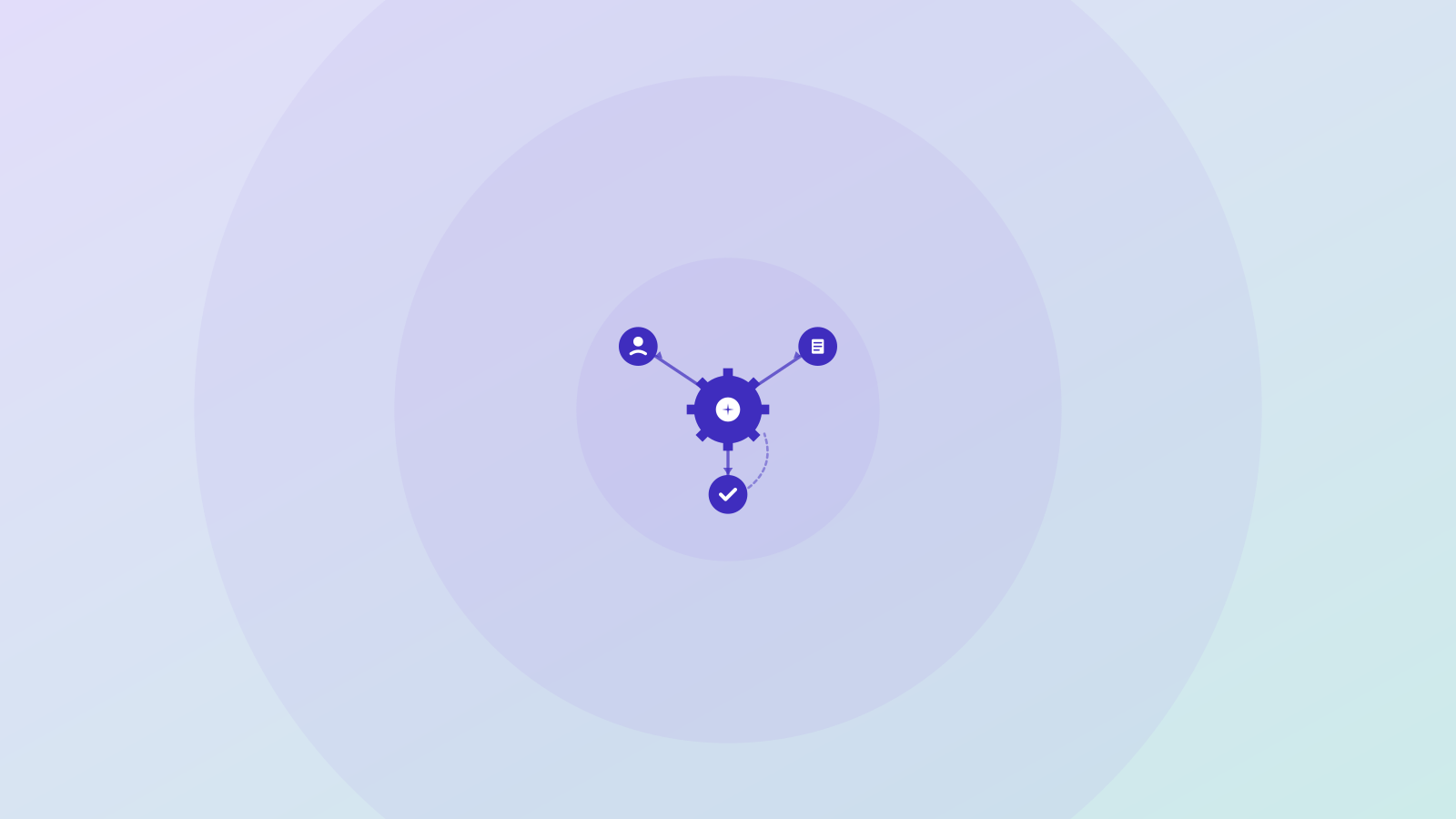
AI agents are the working units of the system, each designed to carry out a specific function within the workflow. Rather than sharing the same responsibilities, they operate with distinct roles that allow the system to function efficiently. In a multi-agent setup, these agents collaborate either in sequence or in parallel, contributing to a shared objective. The orchestration layer keeps everything aligned by managing how information moves between agents and ensuring decisions remain consistent. This coordination allows the workflow to stay on track, even as individual agents make independent decisions.
Modern AI agents are not powered by a single "reasoning engine," but by a combination of language models and orchestration systems. Language models play a key role in interpreting natural language, generating responses, and helping map user intent. However, the actual decision-making about what data to retrieve, which tools to use, and what actions to take is governed by a structured orchestration layer.
On their own, language models are limited to patterns learned during training. That limitation is overcome when they are connected to external systems. Integrating with live data sources and tools lets agents retrieve current information and take action within real workflows.
This is where the distinction between a generative AI assistant and an agentic workflow becomes clear. A chatbot primarily retrieves and summarizes information. An agentic system goes further by coordinating multiple steps, pulling in relevant data, applying logic, and executing actions such as updating a CRM record, routing a case, or triggering downstream processes without requiring manual intervention at each stage.
Agents without memory repeat the same mistakes. Most production agentic workflows include some form of short-term memory (context within a session) and long-term memory (stored outcomes and patterns across sessions). Feedback loops close the performance gap over time, when a decision leads to a good outcome, that signal gets incorporated into future decisions. When it leads to a bad one, human review can correct the course and feed that correction back into the system. This continuous learning mechanism is what separates an agentic system that improves from one that just runs.
Single-agent architectures work well for bounded, well-defined tasks, a research agent that searches and summarizes, or a coding agent that writes and runs a specific script. When the task gets more complex, a single agent becomes a bottleneck. Multi-agent collaboration distributes the work: one agent might handle data retrieval, another makes the decision, and a third handles execution and error handling. This parallel structure makes agentic workflows dramatically faster for complex processes while also making it easier to isolate failures. It's also the architecture Read AI's agent suite is built on — specialized agents for meeting context, action items, CRM updates, and follow-ups operating against the same underlying knowledge graph rather than competing for one model's attention.
The most common multi-agent architecture uses an orchestrator agent to manage the overall process and delegate tasks to specialized agents. The orchestrator breaks down a complex goal into sub-tasks, assigns each to the appropriate specialist, and synthesizes the results.
Router workflows take a slightly different approach; they read the incoming request, classify it, and route it to the agent best equipped to handle it.
Both patterns reduce the burden on any single model and allow each agent to operate within its area of competence, which improves decision-making accuracy and reduces hallucination risk.
A single agent is the right starting point for rapid prototyping, bounded tasks, or processes where simplicity matters more than scale. Agentic workflows are the right choice for regulated processes that require audit trails, complex tasks that span multiple systems, or any scenario where multi-agent collaboration would significantly reduce completion time. The hybrid approach, starting with a single agent in a defined section of a workflow and expanding from there, is how most teams scale successfully, because it limits risk while building organizational familiarity with agentic AI systems.
Agents can only reason about what they can see. That sounds obvious, but it's where most agentic workflow deployments run into their real ceiling. An agent connected to your CRM can update a deal record. An agent connected to your calendar can schedule a follow-up. Neither one knows that the deal stalled because of a concern raised offhand in last Thursday's call, unless something bridges the gap between those surfaces.
This is the constraint Read AI's Personal Knowledge Graph is built to solve. By connecting meetings, messages, email, documents, and connected platforms into a single intelligence layer, it gives agents the cross-platform context required to act on what actually happened, not just what got manually logged. An action item spoken in a meeting gets tracked through follow-up, resolution, and CRM update without a human stitching the trail together. That's what Read AI’s technology makes possible: agents that move across open and closed platforms using a connected knowledge graph, rather than competing for attention inside a single tool's context window.
The practical result: agentic workflows built on a connected knowledge layer make better decisions, because they have access to the full context of how work actually happens.
Autonomy creates accountability questions. Every agentic workflow needs clear answers to: what decisions can the system make on its own, what requires human approval, and what gets escalated when confidence is low. These aren't configuration details; they're governance decisions that belong at the design stage, not after something goes wrong.
Human-in-the-loop checkpoints are how most enterprises handle this. High-confidence, low-risk decisions execute autonomously. When the system encounters an uncertain state, conflicting data, an unusual input, or a high-stakes action, the most secure and transparent systems pause and route the task to a human with full context attached. The human makes the call, and that decision feeds back into the system to improve future performance. Immutable audit logs capture every decision the workflow makes, meeting compliance requirements and providing teams with the visibility they need to diagnose failures.
Agentic workflows operate across systems, so they require access to data, APIs, and credentials. Role-based access controls should limit each agent's permissions to exactly what it needs. Secrets like API keys should never be passed to the agent directly; they should live in isolated jobs that run after the agent has finished and its output has been reviewed. Encrypting data at rest and in transit is baseline. For teams in regulated industries, compliance concerns don't disappear when you introduce agentic AI; they become more important because the system is making more decisions faster.
Most teams that struggle with agentic AI implementation start too big and in the wrong place. They pick a complex process, try to automate all of it at once, and hit integration problems, data quality issues, and governance questions simultaneously. The teams getting real results start differently: they find the process where AI reasoning delivers immediate, measurable lift, and they let that first win build organizational trust in the system.
The difference matters because agentic AI isn't just faster automation. It changes what's possible. A rule-based workflow that schedules follow-ups is useful. An agentic workflow that reads a meeting transcript, identifies a stalled commitment, drafts a follow-up in the right tone, updates the CRM, and routes for human review if confidence is low is a different category of tool. Starting small lets teams experience that difference on a bounded process before expanding scope, which is how agentic AI earns adoption rather than just compliance.
Before designing anything, define what success looks like with a number attached. Not "improve customer response time" but "reduce first-response time from 4 hours to 30 minutes." This forces specificity about which process you're targeting, what data sources the agents need access to, and what decision-making authority the workflow will have.
It also gives you a clear metric to evaluate whether the implementation is working. Agentic AI workflows that lack a measurable outcome tend to drift in scope and fail to demonstrate business value, which kills adoption before the technology gets a chance to prove itself.
This is where most implementations run into resistance. Agentic workflows need access to current data, which often means connecting to legacy systems that weren't built with modern APIs in mind. A 2025 research study by MIT Sloan professor Kellogg and colleagues found that 80% of the effort in deploying a production AI agent went to data engineering, stakeholder alignment, governance, and workflow integration, not model fine-tuning.
Structured, validated data is the prerequisite. Converting unstructured data into formats that AI agents can reliably interpret is unglamorous work, but skipping it produces a workflow that can't be trusted to make autonomous decisions. This is part of why meeting and communication data is often the fastest place to start: tools like Read AI already convert conversations, decisions, and action items into structured signals agents can act on, without a separate data engineering project to get there.
Production agentic workflows encounter conditions that test environments never planned for. Systematic edge case testing covers the situations where input data is malformed, external APIs return unexpected results, or the agent's confidence score falls below the threshold. Guardrail layers that detect hallucinations and prompt injection attempts should be built in from the start, not added after go-live. Staged rollout with monitoring, alerting, and a defined rollback plan reduces the blast radius if something breaks. Continuous learning loops require monitoring data to improve the system over time, so the investment in observability pays dividends beyond just safety.
The use cases vary by industry, but a few patterns appear consistently.
Customer support workflows are among the most mature. An agentic system interprets a natural language request, checks order status via CRM integration, escalates complex cases with full context attached, and updates internal records without a human coordinating each step.
Sales pipeline acceleration reclaims the hours reps lose reconstructing deal context. Read AI’s technology captures commitments and objections from every call, cross-references deal history in the CRM, and pushes a structured update the moment the conversation ends — no manual entry, no dropped follow-ups. Sales teams reclaim 6 to 8 hours per week previously lost to CRM data entry alone.
Contract review and legal workflows have reduced end-to-end processing time by 4x in documented cases, using agents to extract clauses, flag anomalies, and route for human review only where judgment is genuinely needed.
Supply chain orchestration uses real-time data to adjust production schedules, predict maintenance needs, and reroute shipments when disruptions hit.
Research synthesis workflows pull from multiple data sources, cross-reference findings, and produce financial reports or competitive analyses that previously required hours of manual work from knowledge workers who were almost certainly doing more valuable things.
An AI agent is a single autonomous unit that perceives, reasons, and acts. An agentic workflow coordinates multiple agents, tools, and decision points to complete a full process. Think of agents as workers and the workflow as the system they operate in.
Traditional automation follows fixed rules and breaks when inputs change. Agentic workflows use AI reasoning to adapt, handle unstructured data, and choose between multiple paths. They’re built for complex, variable processes, not just repetitive tasks.
It’s a checkpoint where the system pauses for human input. This happens in low-confidence or high-risk situations, or when an agent is designed to keep the user in control. The decision is then fed back into the system to improve future performance.
Customer service, sales, legal, finance, healthcare, supply chain, and HR lead adoption. Common uses include support and sales automation, contract review, compliance, clinical documentation, and operational workflows.
Start small with a clear outcome. Connect and validate data carefully, limit permissions, and build in human oversight from the start. Test edge cases, roll out gradually, and monitor performance continuously.
An AI agent is a single autonomous unit that perceives, reasons, and acts. An agentic workflow coordinates multiple agents, tools, and decision points to complete a full process. Think of agents as workers and the workflow as the system they operate in.
Traditional automation follows fixed rules and breaks when inputs change. Agentic workflows use AI reasoning to adapt, handle unstructured data, and choose between multiple paths. They’re built for complex, variable processes, not just repetitive tasks.
It’s a checkpoint where the system pauses for human input. This happens in low-confidence or high-risk situations, or when an agent is designed to keep the user in control. The decision is then fed back into the system to improve future performance.
Customer service, sales, legal, finance, healthcare, supply chain, and HR lead adoption. Common uses include support and sales automation, contract review, compliance, clinical documentation, and operational workflows.
Start small with a clear outcome. Connect and validate data carefully, limit permissions, and build in human oversight from the start. Test edge cases, roll out gradually, and monitor performance continuously.


%2C%20Color%3DOriginal.png)


